
Barcelona, January 24, 2021.- We have read this analysis by John Walker, President at Holo Sail Holdings Incorporated CEO at Holo Sail Technologies Inc. on the relevance of Blockchain solutions in the supply chain. We hope you find it interesting because of the data, the discussion, and it is useful to his company in the current digital transformation environment.
John Walker: After years of discussions on the need of data sharing and autonomous digital processing of data into actions, we are still searching for better answers and fitting solutions. The key obstacle was, and still remains, the data.
Our basic understanding of what should be in the data, who can use it and for what, how it can be updated and read, and when it should be available is all there. But once we attempt to put that understanding into execution, we run into compatibilities, roadblocks, misunderstandings, and distrust.
On an average domestic cargo trip, anywhere between 5 and 10 parties may have to perform a physical and/or an information-based action to keep the freight moving. An international freight move could increase the number of actions fourfold. Innovators attacking the problem of efficiency zeroed in on data entered into formal documentation as the main culprit of delays. Thus the frantic work on updating electronic documentation that can be entirely prepared, vetted, and processed by computers with minimal interventions from the human operators.
The foundation of a computer-driven system is, of course, the trust in the data put into the system, enforceable agreement on recognizing that data so it doesn’t delay the movement of freight, and security of the documentation rendering all that data for processing by all those parties needing to touch the freight, either physically or logically. As we have learned so far, our technology solutions are good for the tightly controlled silos of data and tightly controlled federations of data “owners”. Any relaxation of those controls leads to breakdowns resulting in delayed freight, abandoned cargo, penalties, and losses.
Disparate nature and distribution of the participants contributing their bit of data to the commons resulted in proliferation of “platforms” in lieu of “applications” to denote concept of contributing and sharing, as opposed to centralizing and controlling. Below the “platform” term, progress on two cryptographic technology innovation brought solution to two data-related issues: tamper-proofing for distributed sharing and assurance of data provenance. Instead of dwelling at each technology in separation, a term “blockchain” is used as a catch all description.
Those technologies, secure hashing algorithms and public-key encryption seemed perfect underpinning trading in virtual currency, which value was determined by rarity and finality of the supply as determined by mathematics, instead of evil entities equipped with the printing presses. From the trading in the virtual currency, we saw blockchain as a perfect solution for the world of supply chain logistics, long perceived by the outsiders as full of distrust, skulduggery, and scheming parties vehemently aiming to maximize their own benefits.
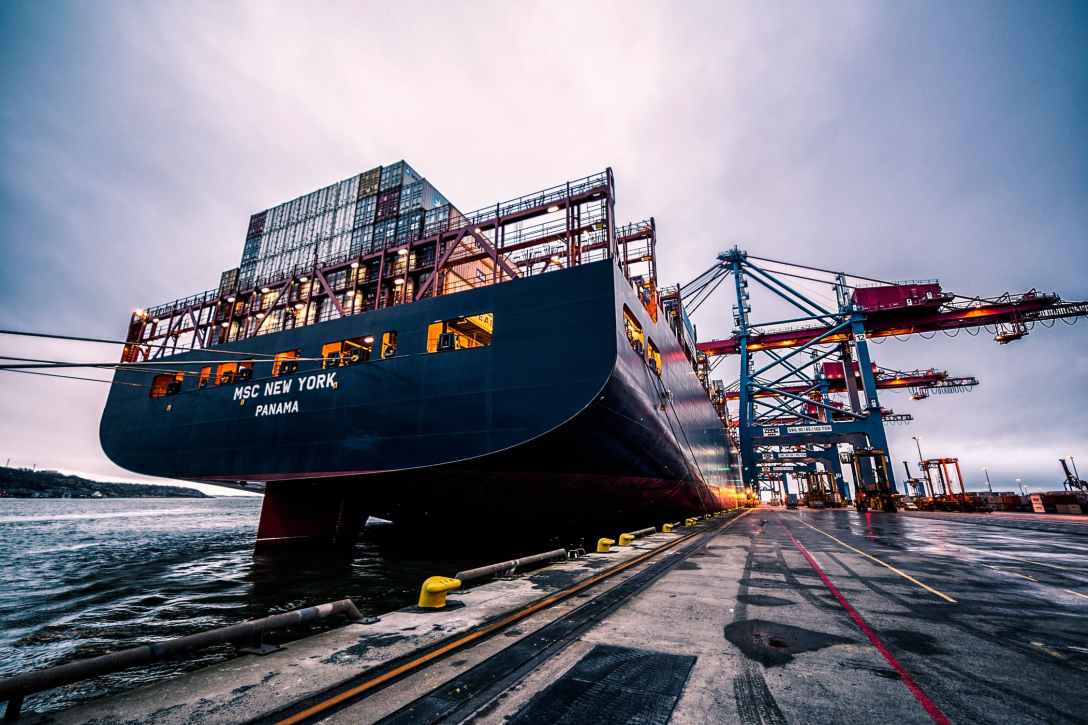
Regardless of one’s perception of the world of international supply chain logistics, it helps to remember that majority of goods the countries trade travels by sea. Only a small percentage of that trade is containerized, but the sheer volume of the metal boxes travelling between remote origins to their distant destinations, variety of goods to which specific treatment can apply, the volume of documentation, activities, and checks that accompany that cargo, and a number of parties “touching” the shipment represent an endless opportunity to improve the handoffs and reducing mistakes that choke off the flows of supplies.
It took just one seafreight shipping carrier allied with a few others to give implementation of blockchain momentum beyond the esoteric world of the virtual cryptocurrencies. Not to be outdone, another carrier partnered by few other carriers spearheaded the response. If someone claimed there is nothing to innovate on in the world of container shipping, Tradelens and GSBN have shown how much can be still done to move freight more efficiently through digital collaboration.
Technologically, the decision to use blockchain data-centric strategy within the supply chain logistics platforms like Tradelens created two long term consequences: high computing costs and scalability. While the increasing computing costs can be shifted from the owners of the platforms to the shippers whose cargo is processed within those platforms, the scalability problem can’t be solved. This implies long term challenges to the business model of the platforms, as the assumptions how the profits are generated challenges the conflict of interest arising out of the platform ownership. Tradelens provides an interesting illustration of this issue.
In addition to the conflict arising out of the carriers channelling transactions into their platform, computing is executed by a for-profit business (IBM) which is interested in maximizing profits from using its hardware to perform the computations. To use a credit card processor as an example, IBM has to charge the merchants percentage of every transaction value to meet their ROI and margin targets. However, “merchants” of logistics services are not inclined to pay any such fee themselves. It has to be passed in its entirety to the shippers who are yet to understand the nature of this additional charge and the need for it in the first place.
Logistically, not all freight moves by sea and not all freight is containerized. If creators of Tradelens and GSBN want to avoid becoming another fragment in the universe of freight-related platforms, they have to master the land-land moves, so that a shipper operating in, say, Mexico and shipping to Canada using combination of seafreight, railfreight and roadfreight using combination of freight forwarding partners is seeing execution of their supply chains as if they were processed, tracked, an handled dealing on a single platform, even if multiple agent nodes are in fact talking to each other to orchestrate freight-moving actions.
Capturing freight moves regardless of the mode and regardless of the documents required to facilitate complex supply chains will take a change in thinking on logic and technology. Especially the technology, as such strategy must circumnavigate the scalability and computing consumption limitations of blockchain. Ideas on accomplishing that and espoused by companies like Holo Sail Holdings, Inc. provide a possible avenue.
Our thinking of reverting to agent-centric strategy of distributed computing elegantly skirts the issue of data-centric strategy of blockchain in which all nodes in the network to compute and maintain the same version of reality. Freeing the network from this limitation would open doors to easier innovation across allowance of multiple modes, multiple regulatory documentation and multiple types of cargo, not just the containerized one. Would Datalens or GSBN attempt that? Because I am certain they would get the ears of many shippers, logistics providers and trade governing authorities.
What’s most interesting about the world of multi-party supply chain logistics platforms, technology like blockchain provide a framework for writing business applications and computer programs. Therefore the test of long term usefulness and reliability of those platforms will come from the upcoming generation of business applications being developed to incorporate ideas of open, secure and highly performing distributed systems to facilitate movement of any type of goods. In the field of technology we often hear a comment about creating a solution looking for a problem which may not even exist.
Maybe the way out of this conundrum is to take one step back and ask ourselves, why did we take up building distributed supply chain logistics applications on the strategy of replicating data certainty of a single physical computer on top of distributed nodes, rather than pursuing distributed agent strategy much better reflecting the supply chain logistics universe.
- Tech as a Sustainability Enabler
 Barcelona, July 17, 2025.- According to the magazine “MHD Supply Chain News”, there’s a growing understanding that sustainability and digital transformation go hand in hand. Among companies leading on sustainability:
 - What´s the difference between 3PL, 4PL and 5PL?

- How to scale supply chain sustainability programs affordably?
 Barcelona, December 17, 2024.- According to an analysis published in Supply Chain Brain, there are four ways to achieve this goal:
 - “The use of blockchain in transportation companies is increasingly relevant, especially in the areas of traceability, security, and supply chain transparency”
 Barcelona October 28, 2024.-
 - Maersk and Hapag-Lloyd announce two ocean network options with equal industry-leading schedule reliability
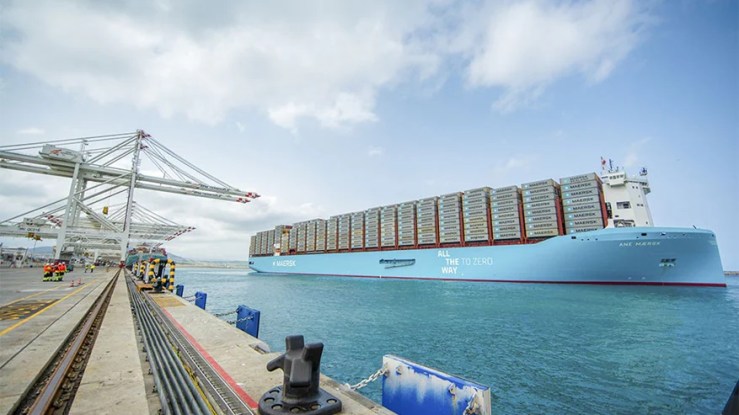 Barcelona, September 10, 2024.- In February 2025, Maersk A/S (Maersk), an entity under A.P. Moller – Maersk, and Hapag-Lloyd AG (Hapag-Lloyd) launch their operational collaboration Gemini Cooperation. The ambition is to deliver a flexible and interconnected ocean network with industry-leading schedule reliability above 90 percent once fully phased in
 - Strategies for attracting and retaining drivers
 Barcelona, July 16, 2024.- The Supply Chain Brain magazine publishes a detailed report on the keys to attracting drivers to a transport company:
 - C.H. Robinson uses AI to report rates to an average of 11,000 daily emails to customers and carriers
 Barcelona, June 11, 2024.- Supply Chain Brain magazine has highlighted the development of an AI by C.H. Robinson. Logistics management company C.H. Robinson has automated email transactions with shippers using generative e artificial intelligence large language models (LLM), to offer shippers who use email the same speed-to market and cost savings as shippers who are… Continue reading C.H. Robinson uses AI to report rates to an average of 11,000 daily emails to customers and carriers
 - Meet us in #SITL2024, AndSoft stand K132, in Paris Villepinte
 Barcelona, March 6, 2024: Meet us in #SITL 2024 stand K132 in Paris Villepinte. Discover our products and our latest innovations in the #digitalization of #transport processes.
 - Maritime cargo, macroeconomic indicator for supply chain planners
 Barcelona, February 13, 2024.- Supply chain, logistics and transportation planners value maritime cargo statistics as an indicator to follow closely:
 - Accenture survey finds 85% of companies plan to manufacture and sell most of their products in the same region in 2026
 Barcelona, November 16, 2023.- Can it be said that industrial relocation is dying? This strategy with great logistical implications seems to be dissolving:
 - Visit the new AndSoft stand, 7E20, at the Logistics Madrid Fair, on November 29 and 30 (Hall 7, IFEMA)Barcelona, October 24, 2023.- All the news of the AndSoft e-TMS platform, explained by AndSoft Directors and Professionals. On November 29 and 30 in Pavilion 7, IFEMA Madrid, the Logistics & Automation Madrid Fair:
- Amazon has announced that it is launching Prime Air drone deliveries in the UK, Italy, and a third location in the USA, by late 2024
 Barcelona, October 19, 2023.- In less than a year, Amazon will open a new mode of transportation of goods: Drones. Amazon Prime Air will be born in three countries during 2024:
 - Keys to fitting sustainability into supply chain planning
 Barcelona, October 5, 2023.- Climate change promotes our strategies to reduce the carbon footprint and have more sustainable transport and logistics companies. Below are recommendations for its implementation, according to analysis published by Supply Chain Brain magazine:
 - “The journey from New York to Los Angeles typically takes a human truck driver five days to complete. Autonomous trucks can do it in 48 hours”
 Barcelona, October 3, 2023.- The benefits of autonomous trucks, without a human driver, are beginning to be confirmed. Supply Chain Brain magazine highlights them in the following analysis:
 - Forbes Magazine: “Recommendations to cut costs in any supply chain, today”
 Barcelona, September 26, 2023.- A panel of 14 Forbes Business Council members share effective ways leaders can enhance their supply chain operations to reduce costs, enhance efficiency and drive business growth.:
 - Continuous efficiency: Ecommerce and Last Mile
 Barcelona, September 7, 2023.- Ashok Viswanathan is the director of supply chain analytics at Best Buy and has published an analysis on the value of the last mile in the great moment of ecommerce. Article published in Supply Chain Management Review:
 - Logistical consequences of the financial collapse of the third largest US carrierBarcelona, September 5, 2023.- As reported by Supply Chain Brain magazine, the financial collapse of Yellow, the third-largest less-than-truckload (LTL) carrier in the U.S., will incur some challenges in the transportation world that people might not have considered.
- USA: “Truck Tonnage Dips 3% Year-Over-Year in July”Barcelona, August 23, 2023.- Transport Topics magazine has published current information on road transport in the USA. The data is indicative, both in the USA and in the rest of the western economies:
- Future of Manufacturing: Generative AIBarcelona, July 26, 2023.- Forbes Magazine: “Let’s explore the ways in which the metaverse, AI and web3 technology are transforming manufacturing and industrial organizations and what the future of this sector may look like as a result”.
- Industrial Distribution: “Just 10% or fewer of digital transformation efforts are successful”
 Barcelona, July 19, 2023.- Industrial Distribution magazine has published the following recommendations to achieve optimal digital transformation:
 - “We all want data-driven decision-making, it’s not gut feeling that we’re doing here anymore”
 Barcelona, July 12, 2023.-
 - Disruptive innovations for mobility thanks to the latest technology
 Barcelona, July 5, 2023.- Vivatech 2023 has unveiled the latest technological innovations in mobility. Great ideas, projects with the combination of the latest technologies:
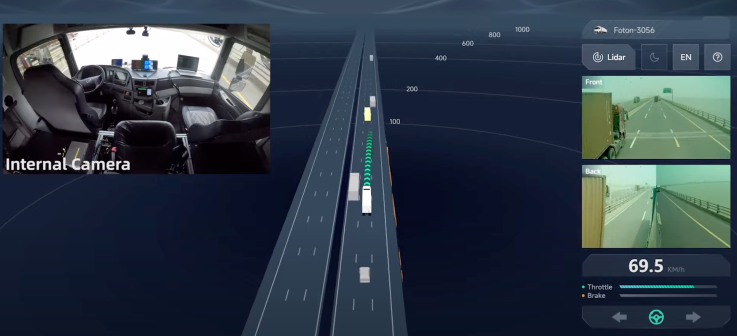
 - TuSimple completes first “Driver Out”, fully autonomous semi-truck on public roads in China
 Barcelona, June 21, 2023.-
 - TMS AndSoft News on MobilityBarcelona, June 14, 2023.-
- Uber eats confirms in the USA its commitment to autonomous delivery with robots
 Barcelona, June 5, 2023.- The latest food delivery with autonomous robots has not worked in all countries. In the United States, Uber Eats seems to have found the formula for success:

 Supply Chain Technological Trends